Last semester, The Beacon spoke with the co-authors of “Liturgy in the Shadows of Trauma: Reckoning with the Roman Catholic Sex Abuse Crisis” to detail their uniquely collaborative writing process and preview the book.
Theology and religious studies professor David Turnbloom and alums Megan Breen, Noah Lamberger and Kate Tyschper began studying abusive cultures within Roman Catholicism in the Collaborative Humanities Investigating Religion and Power (CHIRP) Lab.
Their research culminated in two journal articles and the book, which they launched to the UP community at a public event on Feb. 2.
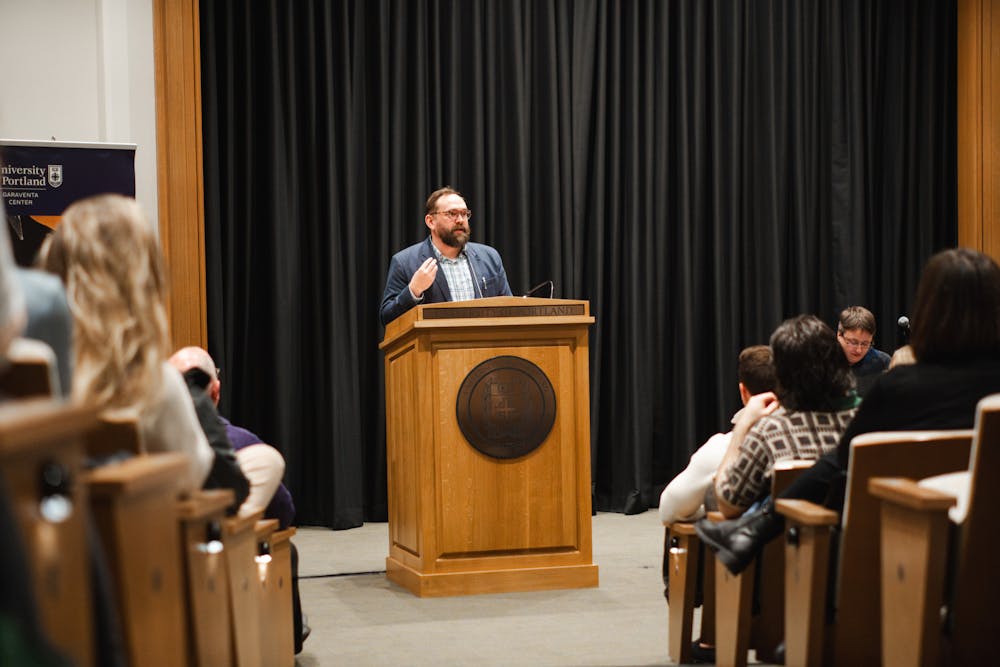
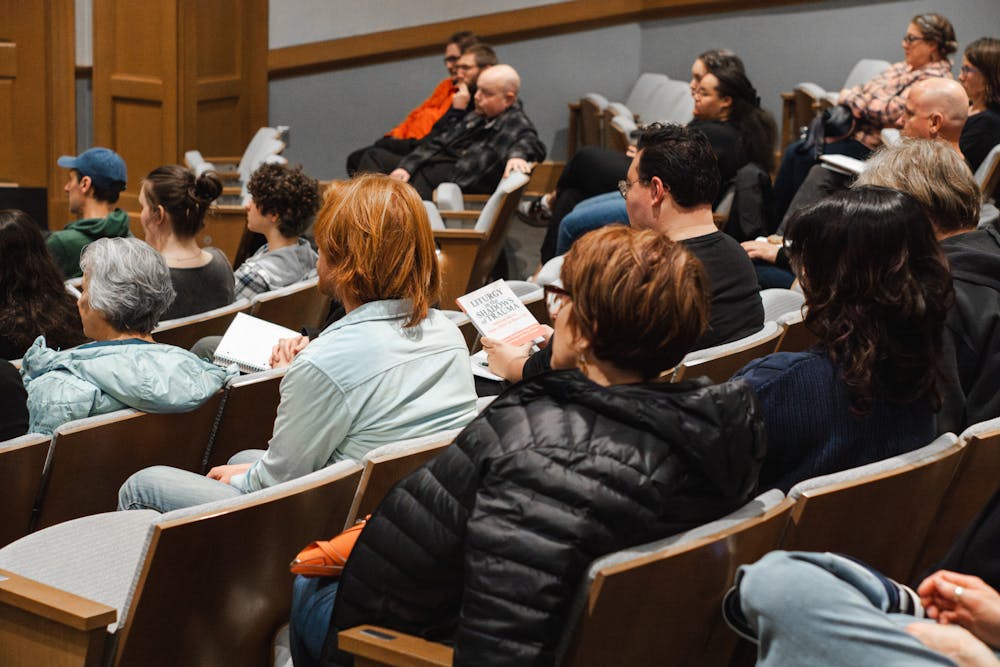
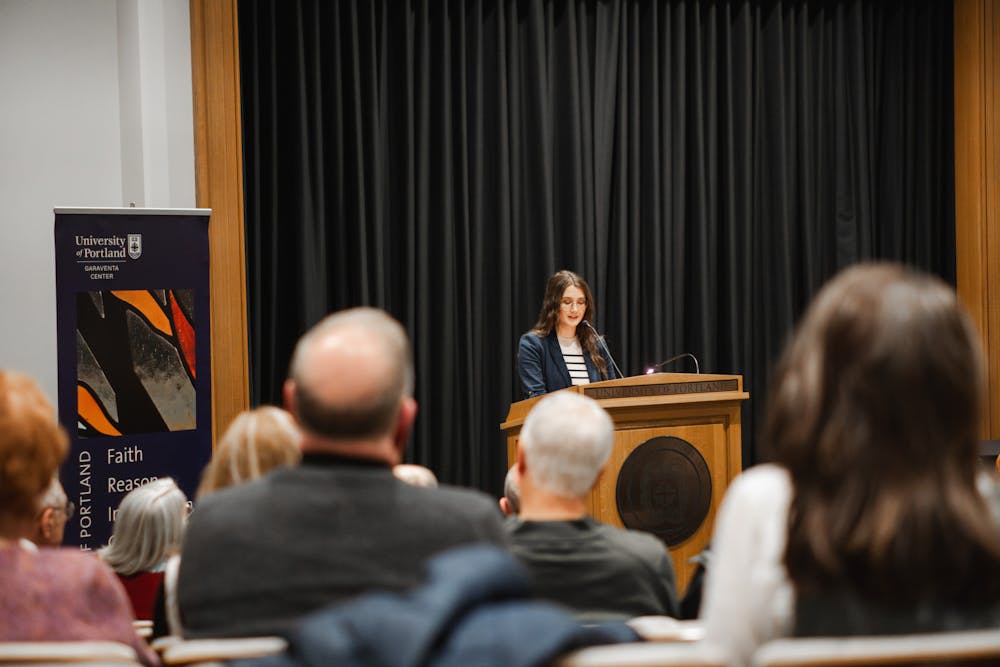
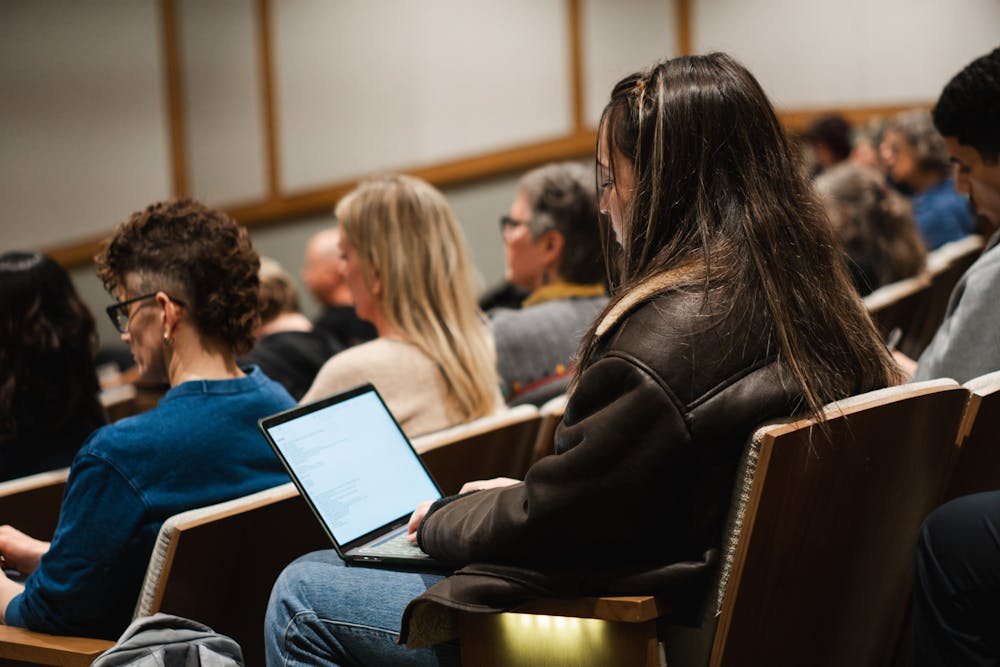
Hosted by the Garaventa Center and attended by family and peers, the event featured brief readings followed by a Q&A.
While Catholic liturgy is often viewed as a source of healing for survivors of clergy sexual abuse, the book describes how trauma from the abuse crisis can prevent worship from functioning in that way. The authors examine how church structures have hindered survivors’ recovery and propose more trauma-informed approaches to liturgy.
Each author read an excerpt from a different chapter, highlighting the range of topics and research in the book.
Breen opened with chapter two, which explores how clericalism — the church’s hierarchical system that concentrates power in the clergy — shapes inadequate responses to trauma.
“The scandal of systemic CPSA [clergy-perpetrated sexual assault] is far more than individual acts of sexual assault,” Breen said. “To use a common metaphor, CPSA is a symptom of clericalism's disease.”
Turnbloom followed with chapter three, which tries to define trauma and post-traumatic stress disorder (PTSD) by describing how PTSD can alter a person’s relationship to religious symbols and practices.
For instance, Turnbloom says that due to the triggering nature of flashbacks, any aspect of liturgy can become associated with memories of violence, including a stained glass window, a priest’s vestments or the lyrics of a hymn.
Building on her co-authors’ readings, Tyschper read from chapter seven, which focuses on how church rhetoric and language can unintentionally harm survivors. She offered trauma-informed liturgical practices that prioritize empowerment, safety and listening to ordinary church members.
“In order to fruitfully implement the principles of safety and empowerment, one must begin by listening to the people who have been directly affected by systemic CPSA to facilitate healing and avoid further damage,” Tyschper said.
Lamberger closed the readings with an excerpt from the conclusion, saying that the church should not respond to survivors’ grief by defending its own goodness, but by affirming the survivor's pain and healing. He emphasized the importance of accompanying survivors, even if that means supporting those who choose to leave the church.
Following the readings, the authors opened the floor to the crowd for questions.
When asked about writing the book at a Catholic institution, Tyschper reflected on how formative it was to engage with heavy questions in a supportive academic space, particularly through the CHIRP Lab.
“It was incredibly helpful and really positive as a student to be able to be in a space where I could ask the questions that I have held inside my entire life,” Tyschper said.
In response to questions about trauma-informed practices, Lamberger noted that there is no single “one-size-fits-all” solution for fixing systemic CPSA, but stressed the importance of community-centered approaches. Turnbloom connected this to clericalism and the church’s overemphasis on following the liturgical rules at the expense of care for those most marginalized in a congregation.
“Worry a little less about making sure that you're following the rubrics, and worry a little bit more about [how] the way you follow the rubrics [is] actually creating a better world,” Turnbloom said.
Havannah Hoeft, a junior communication major, attended the event for class, but left with an appreciation for the authors’ willingness to discuss such a sensitive topic at a Catholic institution.
“I thought it was very insightful,” Hoeft said. “This is a tough conversation that isn't normally had. Like when people go to church, you don't talk about these things. So I think it's very important to bring it to attention being at a Holy Cross campus.”
Robin Aughney, a senior English major who’s in the gender and sexuality cohort of the CHIRP Lab, praised his friends for presenting their book and the university for encouraging this type of research.
“For the damage to be taken seriously with weight, not only by the people who understand it and care about it deeply, but then funded by an institution that has every reason not to accept that, means a lot to me,” Aughney said.
Kaylee Monahan is the Copy and Opinions Editor for The Beacon. She can be reached at monahan26@up.edu.