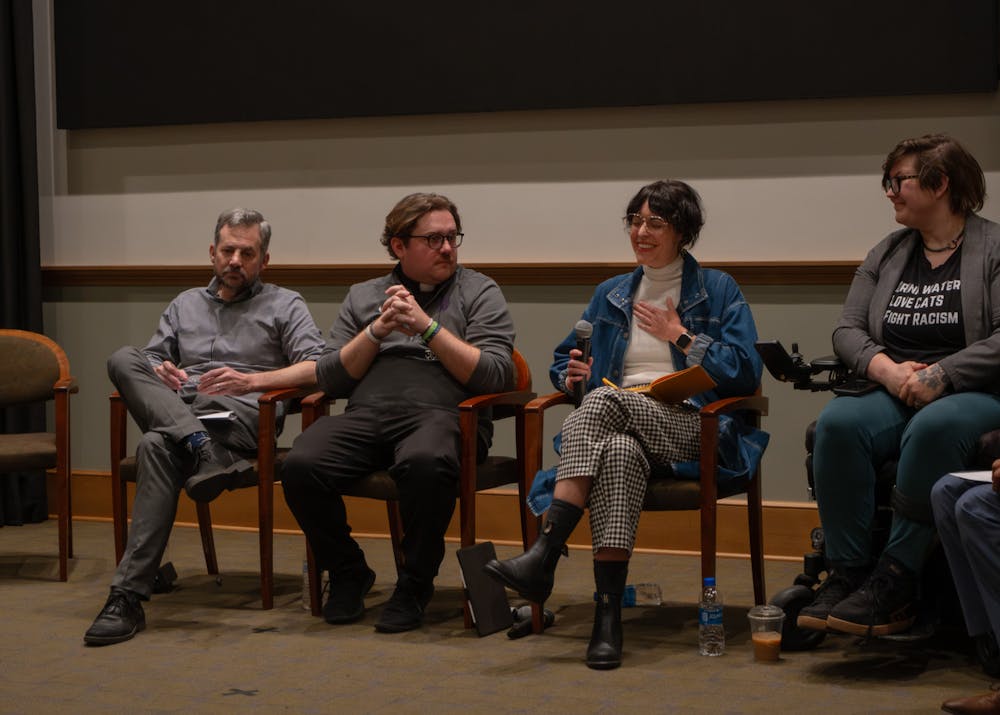
On Jan. 19, UP hosted a multidisciplinary panel to recognize Martin Luther King Jr. (MLK) Day, focusing on his famous “I Have a Dream” speech. The panelists discussed ways that the UP community can embody traits of freedom, community, solidarity and justice, which are values central to the speech.
The panel, held in the Brian Doyle Auditorium, featured speeches from faculty, staff members and a student representative, with an audience Q&A at the end.
Political science professor Bill Curtis opened the event and spoke about the first value: freedom.
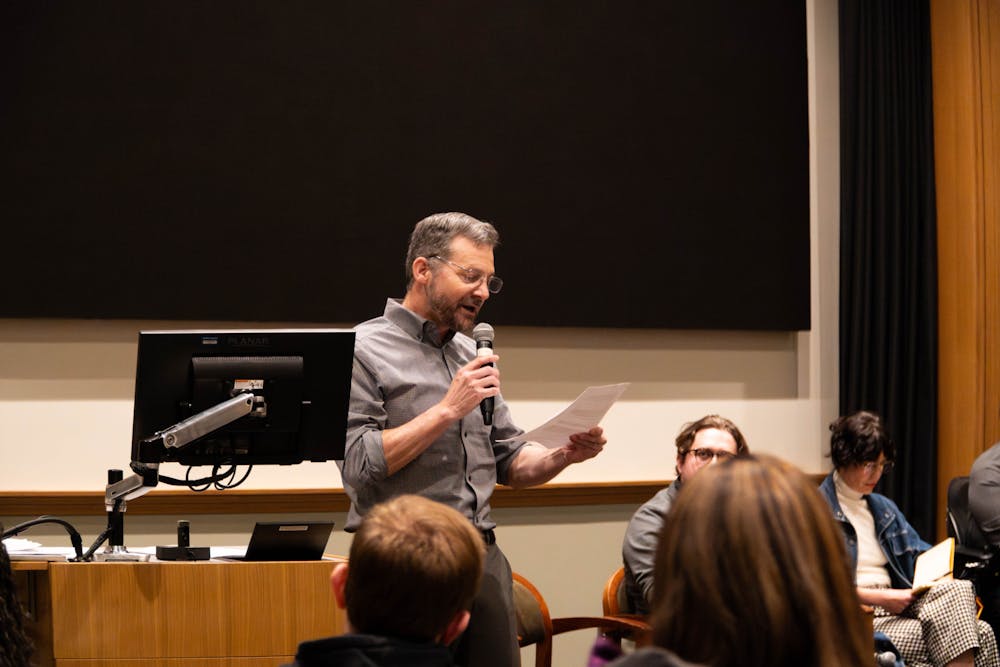
Curtis’s presentation spanned from 17th century philosophy to the writing of the Declaration of Independence and what Curtis described as its founding principle of equality. His talk tied the United States’ founding documents to MLK, and his work during the Civil Rights Movement.
“Dr. King quoted and referred to the declaration all the time in his speeches and writings because he knew it was a winning argument for the freedom of all Americans, and especially for Black Americans suffering under segregation and Jim Crow,” Curtis said.
The second presentation came from Christie Hall Director Fr. Nicholas Guiney, who talked about the importance of building community at UP. Guiney spoke from his experience working as a member of the Holy Cross congregation. He noted that MLK’s message stressed caring for one another not as a performance, but as a true act of love.
“[MLK] knew that in this beloved community, [community starts] with those who are right in front of you, and ripples outward from there,” Guiney said. “Community isn't just about feeling good together. It's a training ground where we learn to truly see one another.”
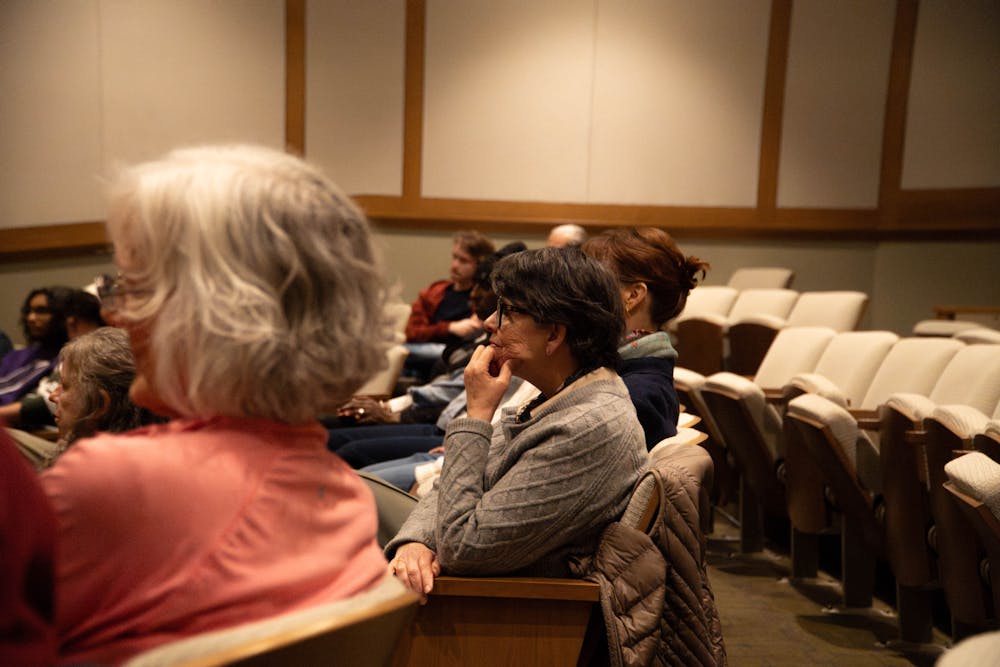
To Lauren Alfrey, professor of sociology and social work, solidarity often means giving something up to benefit the larger group. This could mean offering time, money or comfort. A key aspect of this work is also being in tune with oneself.
“[It’s important that we] recognize that for any examples we have from history of what progress looks like and how imperfect it can be, that we always have to be forgiving of our mistakes, and try our best to be honest with ourselves about when we have the capacity to make a sacrifice for someone else,” Alfrey said.
Associate Director for Training, Support & Development, SR Ross, touched on the final tenant of the talk: justice. Ross spoke about the Equal Justice Initiative, a non-profit headed by Bryan Stevenson, whose goal is to end mass incarceration. Ross emphasized seeking justice, even when it challenges your expectations.
“It is easy sometimes to apply justice to people that look like us, to advocate for people that think similarly to us,” Ross said. “But really what is important, to Bryan Stevenson’s point, is making sure that the people that it sometimes feels hardest to apply justice to are being served justice.”
The event’s prepared speeches ended with words from Associated Students of the University of Portland (ASUP) Speaker of the Senate Giovanni Vaz, who summarized and reflected on the speakers before him.
Near the session's end, Ross offered a final piece of advice to those present.
“The web of injustice is big, it's huge,” Ross said. “It covers all of us. And what's most important is for you to tug at the pieces of the web that are closest to you, that you can start to unravel. And that's going to look different for everyone.”
Nandita Kumar is the Community Engagement Editor for The Beacon. She can be reached at kumarn27@up.edu.