As both a Catholic Holy Cross and liberal arts institution, theology is foundational for UP’s educational model.
As the department of theology and religious studies moves towards inclusive programming with changes to the department’s name and UP’s core requirements, this year’s addition of non-Christian theology courses rounds out the effort.
According to David Turnbloom, professor of theology and religious studies, non-Christian religions have been discussed in classes before but never as the sole focus.
The new classes include “Engaging East Asian Thought,” “Islamic Spirituality” and “Buddhist Thought and Culture” and aim to achieve the department's goal of students feeling represented in the courses offered.
“One of the goals of the theology and religious studies department is to make sure that all students can engage with their faith while also engaging the faith of others,” Turnbloom said. “These courses provide avenues for students to explore their own faith and the faith of others in a more focused way, a way that adds more depth.”
In light of a new semester approaching, The Beacon spoke with the professors teaching new Theology courses to get an overview of what each class entails.
THE 391A: Engaging East Asian Thought
Differing from the two other new classes, this course gives an overview of different schools of thought instead of focusing on one practice. The course covers the history, key concepts and main practices within Hinduism, Buddhism, Confucianism, Taoism and Shinto.
The course also discusses contemporary issues, such as end-of-life care, and how the various traditions address the issues.
Throughout the semester, students read essays, scriptures and fundamental texts. Beyond readings and class discussions, students write essays as their main form of assessment.
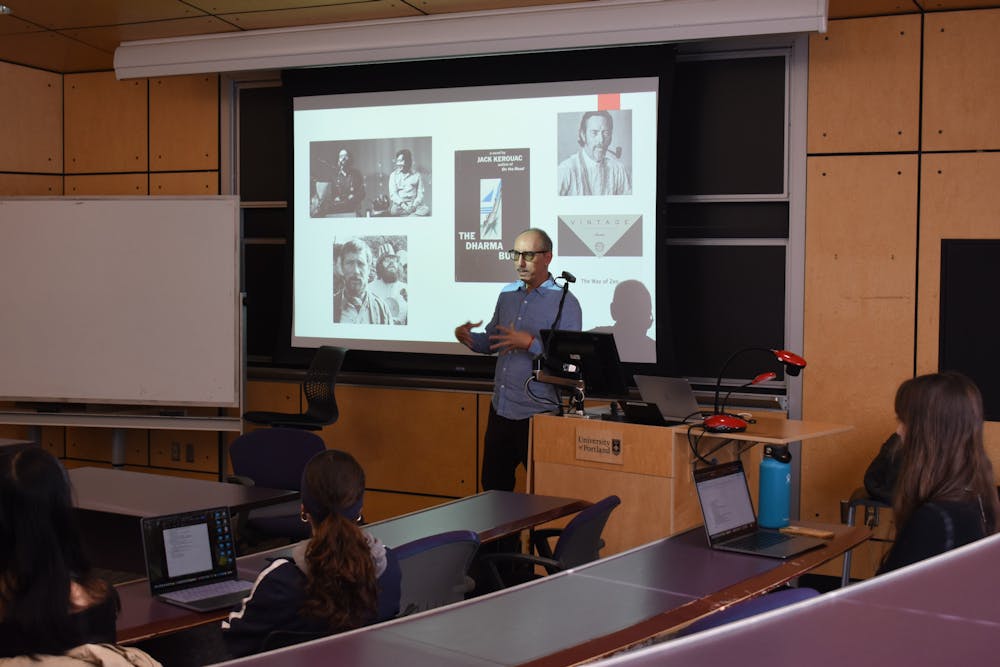
Professor Seth Clippard teaches THE 391A: Engaging East Asian Thought.
Seth Clippard, the professor who teaches the course, encourages students to compare their religious background to those covered in class.
“In a classroom like this, most of the students, regardless of whether they're Catholic, are interested in learning about how people from different religions think and what's important to them,” Clippard said. “I encourage them to use whatever perspectives that they might have about religion to compare and analyze.”
Clippard’s goal with this course, beyond expanding students’ religious knowledge, is to give them the necessary tools to engage with people of these covered traditions.
“What I try to do is provide [students] opportunities to understand the religious tradition enough to where, if they meet somebody from that religion, they can engage thoughtfully and be reasonably well informed about what that is like,” Clippard said.
THE 391B: Islamic Spirituality
This survey course aims to introduce students to Islamic spirituality. While the class is open to everyone, professor Madiha Shaukat says most students have little knowledge on the subject and designed the course with that in mind.
Students can expect to complete readings from Islamic sources, including the Quran and classical texts. In addition to the readings, students engage in conversation with the texts, both in class discussions and in writing assignments.
In an effort to create a more holistic experience, Shaukat also assigns visual and audio sources for students to witness Islam from the perspective of those who practice the faith.
Shaukat recognizes that students come into class with diverse backgrounds and wants them to play to their strengths when it comes to the course.
“The midterm and the final both are aimed at students exploring something that really captivated them within the course, or something that they brought with them, and then explore it in whatever way they want,” Shaukat said.
Through the variety of assignments and class materials, Shaukat hopes students are able to thoroughly engage with the subject and understand that their final grade won’t depend on one assignment grade.
“The purpose of variety is to help students kind of scaffold the process,” Shaukat said. “You know, it's not like one assignment will just define everything for them. I want the process to be kind of broken down.”
THE 391C: Buddhist Thought and Culture
Taught by professor Patrick Lambelet, this course serves as an introduction to Buddhism.
Through weekly readings and discussion posts, students learn about the origins of the religion. The readings, a mixture of primary sources and a textbook, are specifically chosen for students to get accurate information about the religion.
“So that [students] really get a better sense of the feeling and the flavor of the kind of language and ideas that they're going to find,” Lambelet said. “You know, it's very different when you read a Western scholar who's summarizing something, and then you read an actual text from a Chinese author, or from a Tibetan author, or any kind of author.”
Students can also expect to participate in regular class discussions, take a midterm exam and write a final paper.
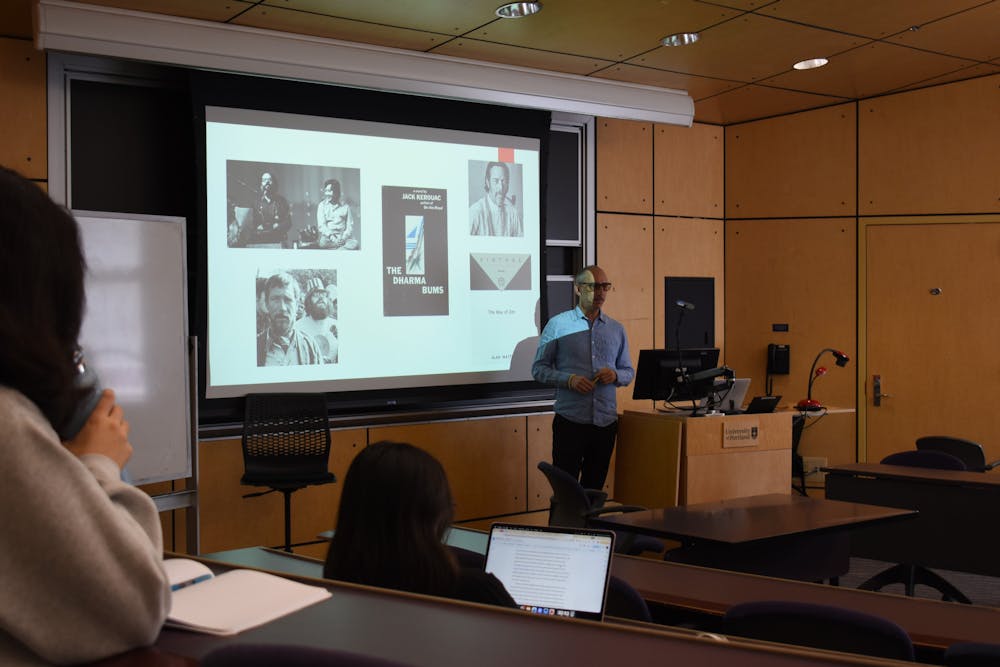
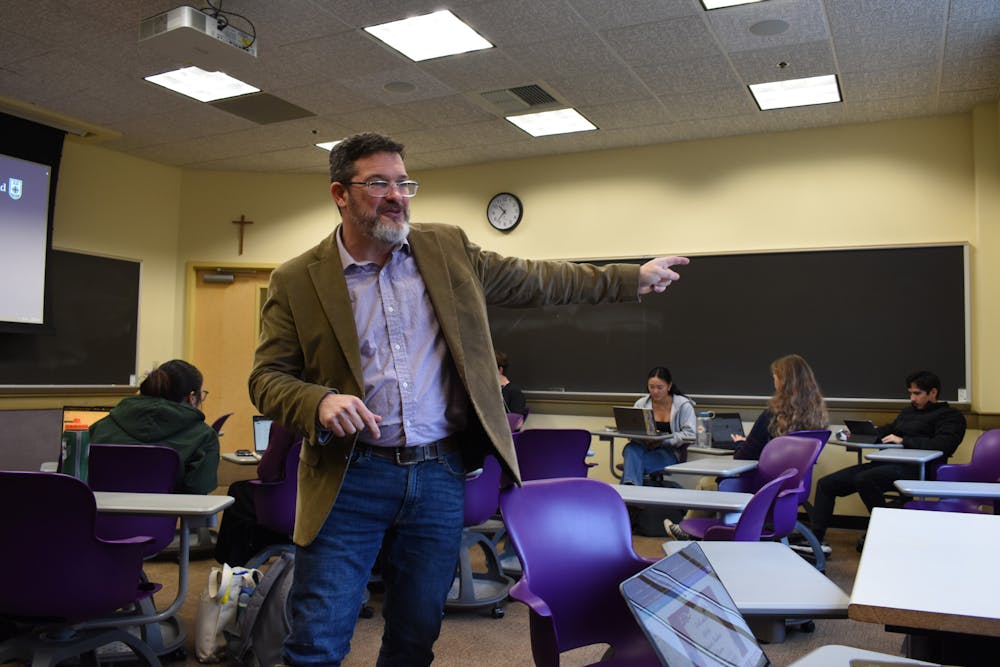
Professor Patrick Lambelet teaches THE 391C: Buddhist Thought and Culture.
Additionally, students are required to do a site visit to any Buddhist center or temple in Portland. According to Lambelet, with different Buddhist traditions being represented across the city, Portland is an excellent place to explore the religion’s vast teachings and practices.
While a bit hesitant about how this course would be received at a Catholic institution, Lambelet expresses excitement at how students have engaged in the subject and are open to learning about a faith different from their own.
Lambelet hopes students leave the classroom feeling confident about their knowledge and ability to engage in conversations about faith.
“It gives people more understanding and more respect for traditions and cultures that are not necessarily their own,” Lambelet said. “Becoming more conversant about religion and about culture, that’s kind of the bigger aim I have. I think it's something we really need a lot more of in our society right now.”
Samantha Zavala is the Diversity, Equity and Inclusion Editor for The Beacon. She can be reached at zavala27@up.edu.