Before digital tools made budgeting more accessible, people relied on ancient relics like pen-and-paper ledger books and labeled envelopes filled with cash.
If these don’t sound familiar, don’t worry. For many Pilots, the secrets of personal finance weren’t taught in high school.
To unlock this lost art, The Beacon spoke to three campus experts about their tips for successful spending and saving.
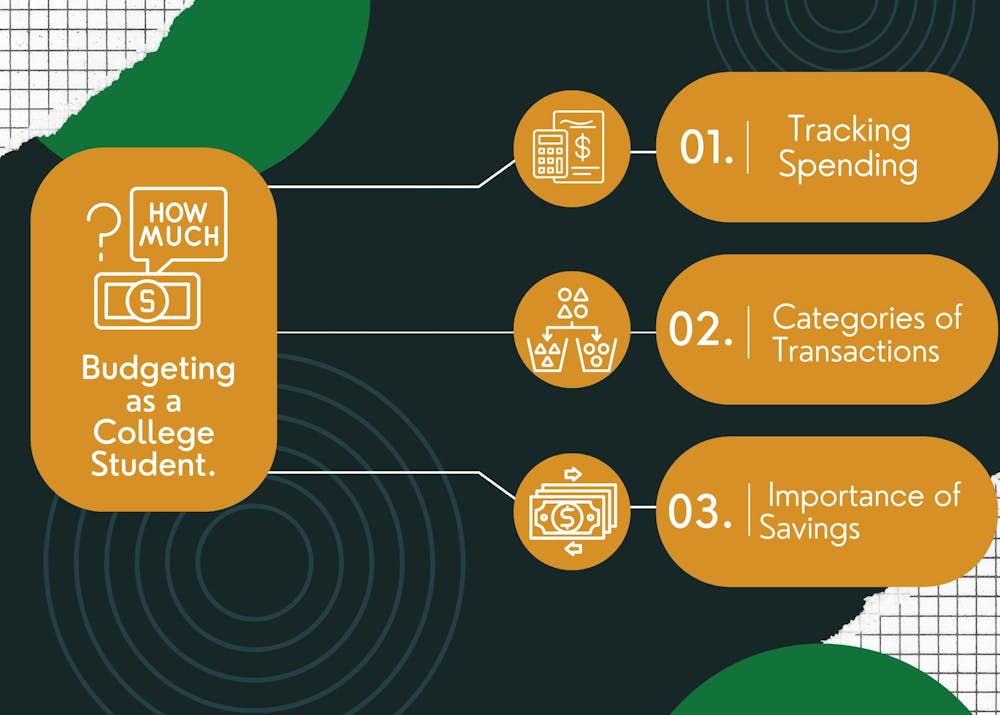
Tracking your spending
Accounting professor Hao Lizhong knows that careful spending is a necessity in life and a habit that is developed over time.
“When I was young, I was told that a penny saved is a penny earned,” Lizhong said. “Our resources are limited. Even when we start a career and earn money, we cannot overspend what we have. Talking about budgeting and saving money is one way to manage our lives.”
Finance professor Brian Adams says the most important thing about the budgeting process is understanding your spending patterns and making necessary changes.
He suggests asking yourself one question: Are you bringing in more money than you are spending?
“Try to figure out where you are spending money during the month to determine if you think your spending patterns are appropriate,” Adams said. “Make sure that your income covers your expenses, and [ensure] your ability to save money on top of that.”
Fortunately, tracking spending is easier than ever, according to Adams.
“Most of the transactions we conduct [now] are digital,” Adams said. “So it is very easy to find records of where you're spending your money every month and say, ‘Okay, I'm spending $5 a day at the coffee shop — does that make sense to me?’”
Categorizing transactions
So, you know exactly where your money is coming from and where it is going. Now what?
Finance professor Kolay Madhuparna concurs that tracking your spending is the first and most important step. The next is to categorize.
“I would put all my receipts in front of me and [organize] them into some of the basic categories,” Madhuparna said. “Food, transportation, rent and housing, these are [what] I'm talking about. These are fundamental.”
Lizhong echoes Madhuparna’s emphasis on these necessary categories and stresses the need for allocating money to a discretionary category. These include your “wants,” like a new entertainment system, a concert or monthly activities with friends.
Madhuparna suggests you think about these categories as different boxes you can fill every month. Using your income, ask yourself how much money will go in each box.
“It's a gradual process of changing into better financial habits,” Madhuparna said. “[Once] you set a goal, just be mindful. Sometimes it's hard to keep those goals, [so whether it's] putting money in envelopes, using cash [or an app], find a way that works for you to stick to that budget.”
How to save money
As much as budgeting is about prioritizing your spending, Adams says it is even more important to prioritize your savings. For him, savings provide peace of mind to know you have money in the bank if you need it.
“Some people just say, ‘Okay, I have my income, I have my expenses, and then anything left over will go towards savings,’” Adams said. “Well, at the end of the month, especially in college, we tend to spend most of the money we have anyway, so we need to move savings to the top of that expense ladder.”
Whether it’s $20, $50 or $100 a month, sticking to a goal of how much you want to save every month can set your future self up for success.
Adams and his fellow professors agree that especially as a college student, practicing budgeting is all about strengthening the habit for when you’ll need it in the coming years.
“Right now, when you're in school, and likely not having to work [full time], your budget is not very complex,” Adams said. “However, once you get out into the professional world, you are responsible for funding your lifestyle and your health, both mental and physical, which is going to be affected by your ability to cover your monthly living expenses.”
Even if you didn’t learn to balance a checkbook in a finance class, Madhuparna believes managing money is essential for any student, regardless of their major or path in life.
“You're going to come in touch with money,” Madhuparna said. “You're going to make some and you're going to need to manage it, handle it and grow it. Save money so that you can spend it later.”
Kalena O’Connell is the Living Section Editor for The Beacon. She can be reached at oconnell27@up.edu