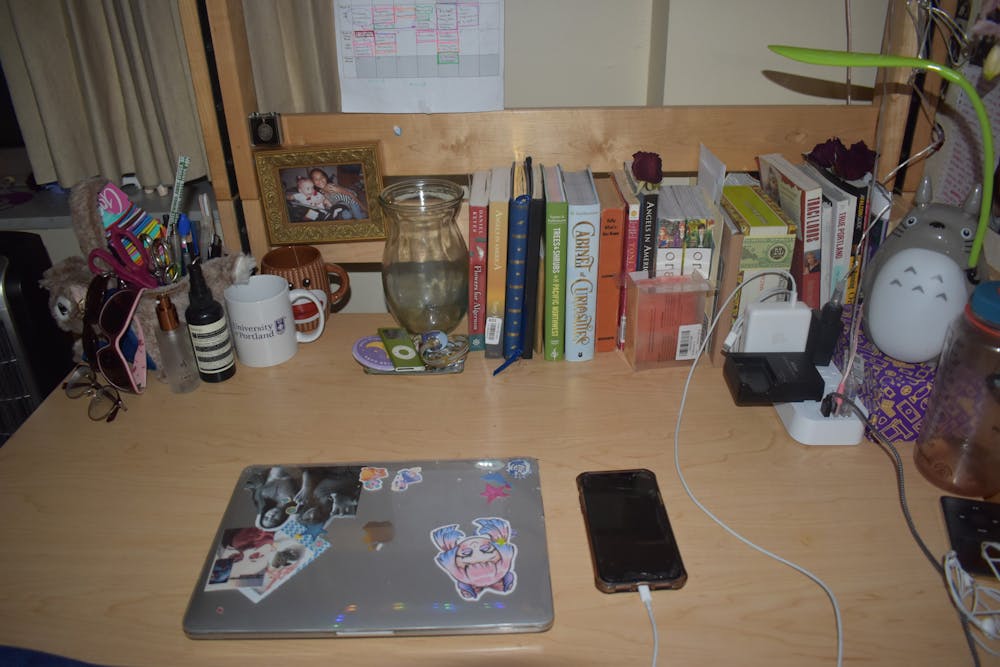
For many students, cleaning isn't the highest priority. With assignments piling up, pressure to maintain a social life and deal with work, it's easy to see how clutter can accumulate unnoticed. Sometimes, the mess only becomes apparent when it has dauntingly piled up.
If you're like me, when your busy life catches up to you, it's important to remember that clutter is normal. Life is intense, and it's easy for things to slip past us when we’re distracted, overwhelmed or just trying to keep our heads above water.
But cleaning for yourself shouldn't feel like a punishment for living; it’s a tool to reclaim control in a chaotic world.
Organizing the clutter and discarding what's not necessary will help you clear some of your mental clutter as well. You may feel less overwhelmed by tasks when you know where all your tools are and you have a clear space to work.
The most important step to cleaning is acknowledging the mess without guilt and devising your plan to tackle it.
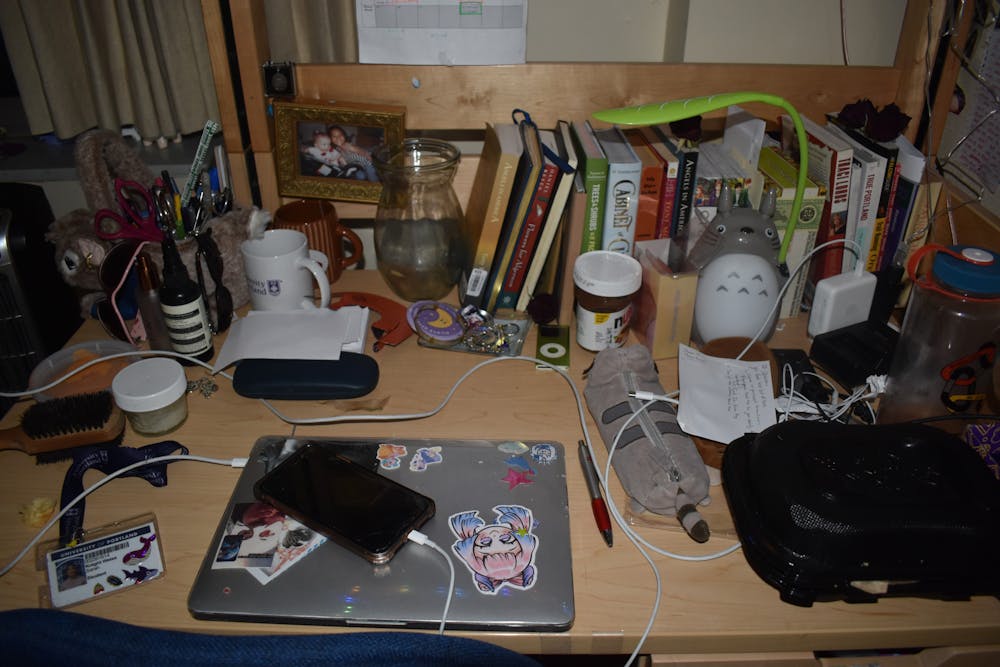
Cleaning an entire room feels overwhelming, but breaking it down into categories makes it manageable. As I live in a dorm, my main cleaning groups are trash, clothes, things out of place and things without a place.
Start with the trash. Anything that’s clearly garbage goes straight into the bin, like plastic wrappers, packaging, bits of paper and whatever else. For me, this is the most satisfying part of the process because it clears the clutter almost immediately.
Then, tackle the laundry. This is a big task, and though it takes a lot of time, these 40-60 minute intervals of waiting for the laundry to cycle can be put towards tidying other parts of your room. I like to try to pair tasks together for efficiency, so while you carry down your laundry, if you have the arm room for it, you can also carry down your garbage. Two birds, one stone.
Next, organize what's left. The goal here isn't to be perfect, it's to be functional. For example, your desk should have room for you to work, and if that means stuffing clutter into drawers, so be it.
But anything with a place should go back to it: pencils in the pencil bag and art projects packed away. For you, your items may look different, but the principle is the same — If it has a home, return it to where it belongs.
Now you’ll be left with the items that don’t have a clear place to be, like decorative items you want to display and things that need to stay out. This is where “tidy-ish” comes in. Straighten out stacks of paper, align books and arrange things intentionally so they sit nicely. If it's going to stay out, it doesn't have to be piled up or strewn about — it can be arranged intentionally.
Finishing with a clean slate means wiping all the surfaces down for crumbs, dust or any gunk that's accumulated. This last step ties everything together and makes the room feel completely refreshed.
Hopefully the clarity from an organized space makes it easier to focus on your work, find what you need quickly and feel more at ease in your home, as it has for me.
Sarah Knight Weiss is a photographer at The Beacon. She can be reached at Knightwe28@up.edu
Have something to say about this? We’re dedicated to publishing a wide variety of viewpoints, and we’d like to hear from you. Voice your opinion in The Beacon.