This professor turned his office into a tech history museum
Living > This professor turned his office into a tech history museum

This professor turned his office into a tech history museum

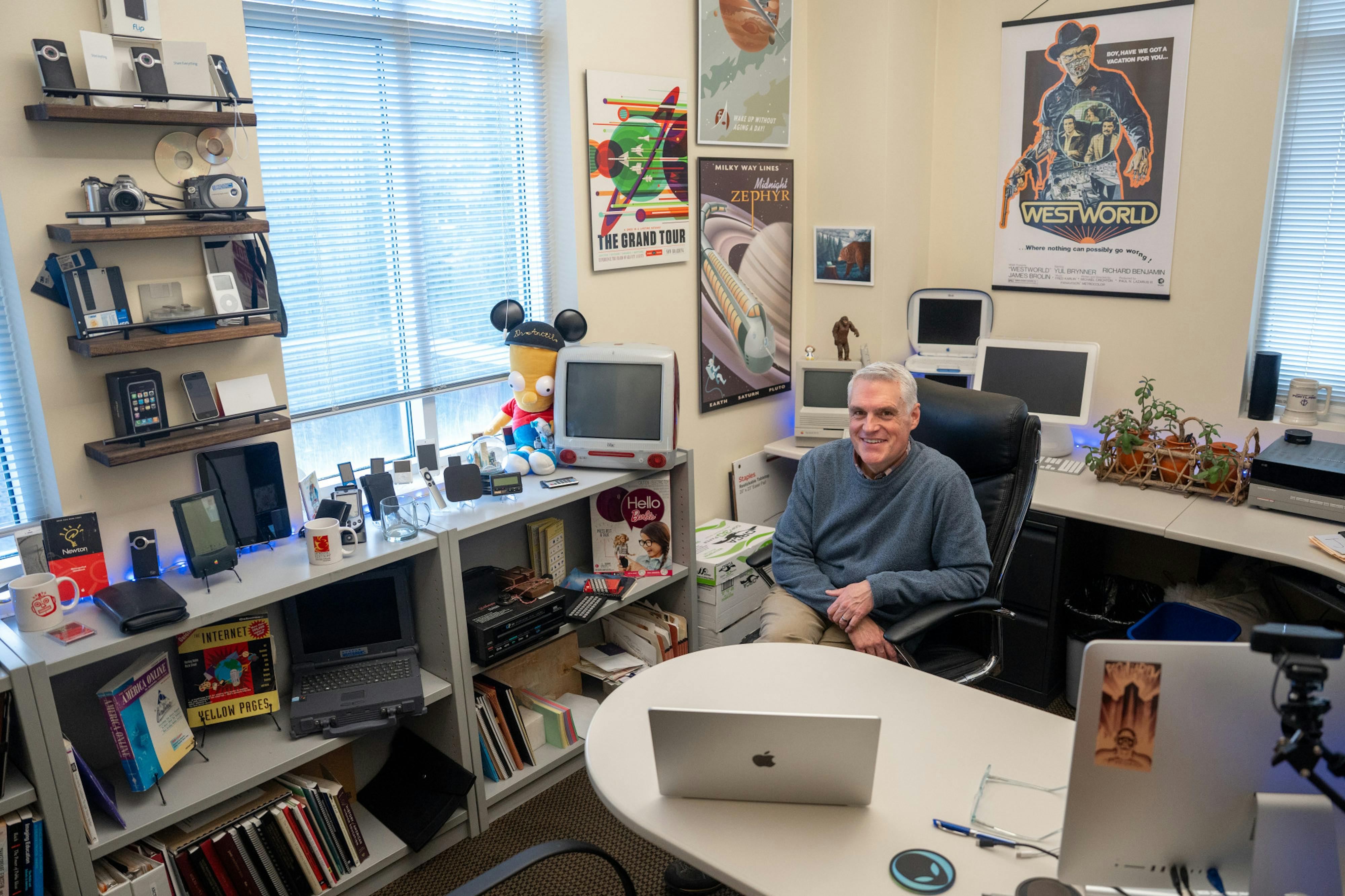
The “Cosmic Techno Museum” is located in Franz Hall 427

Professor Eric Anctil sits in the "Cosmic Techno Museum."

by Evan Guerra / The Beacon

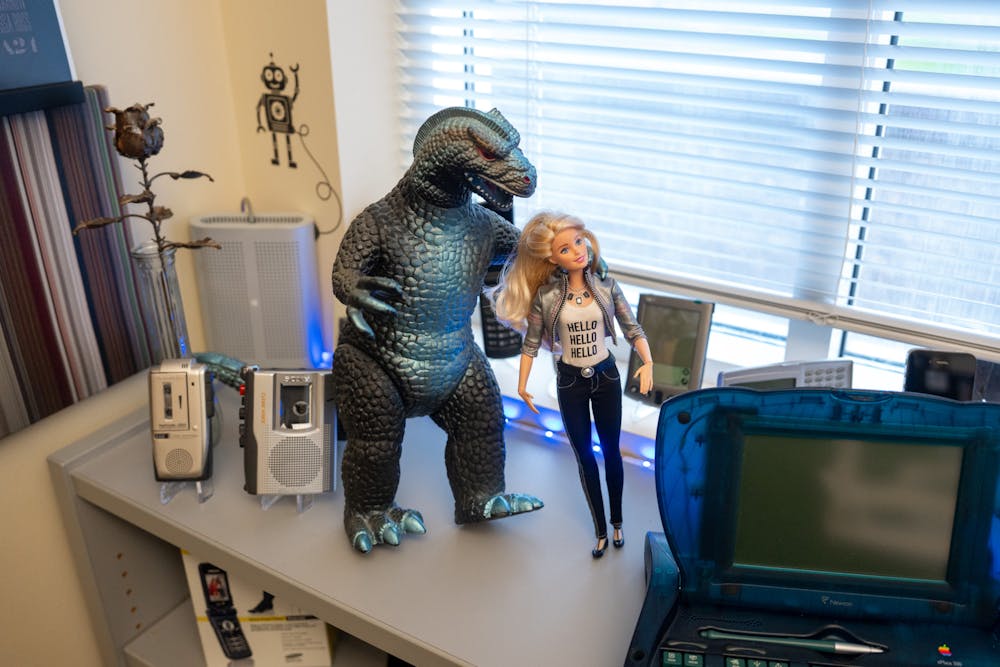
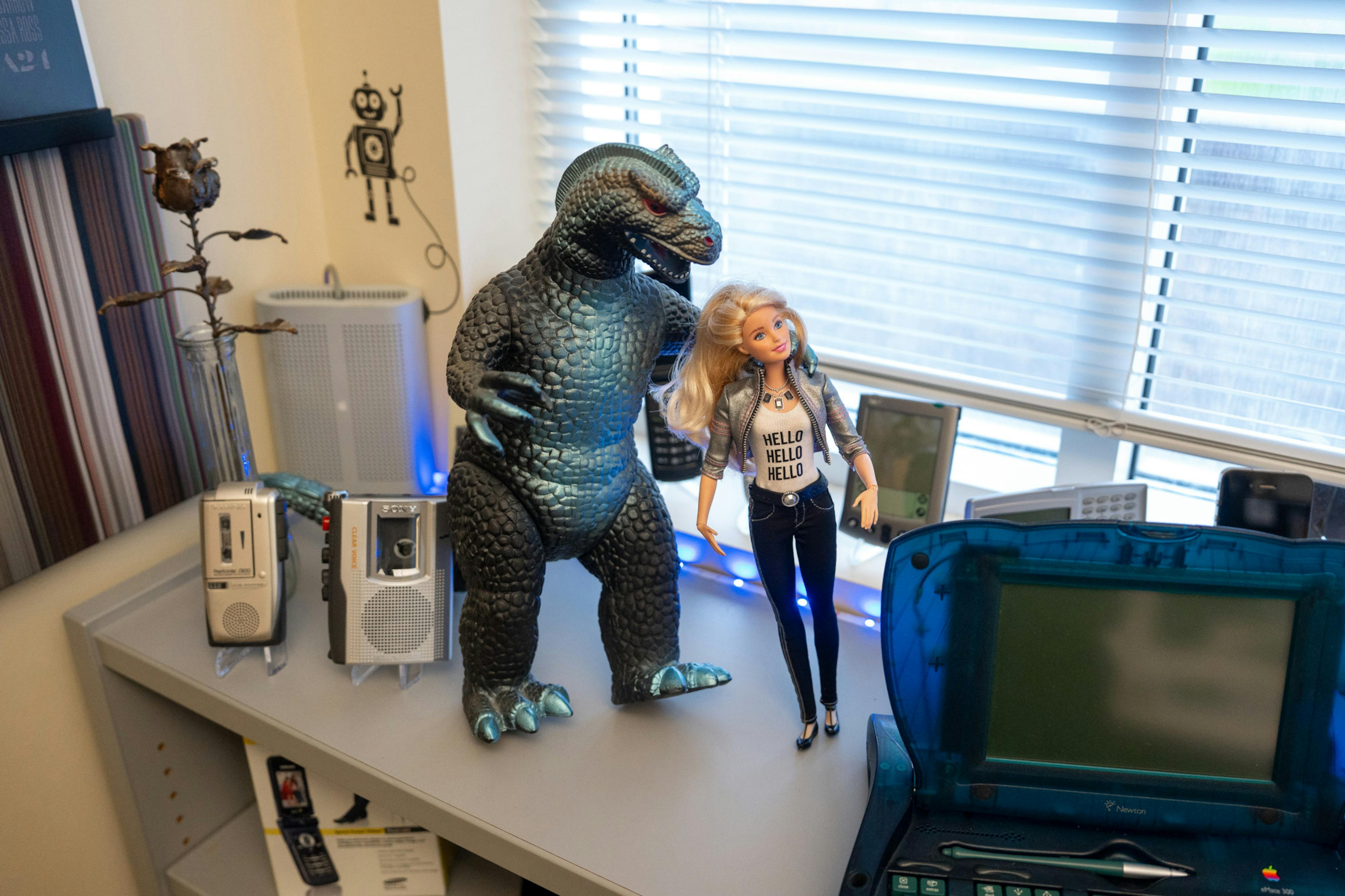
Mattel’s toy invention in 2015, Hello Barbie, was a communicative technology that talked at the click of the button. Education, media and technology professor Eric Anctil says this innovation is a harbinger of current artificial intelligence and virtual assistants.

Over a decade since its invention and eventual discontinuation, Hello Barbie now lives in the “Cosmic Techno Museum,” Anctil’s collection of technological artifacts. 

The museum holds a combination of Anctil’s personal items and donations. Located in his office in Franz Hall 427, the collection is not only a conversation starter but a resource for class lectures. 

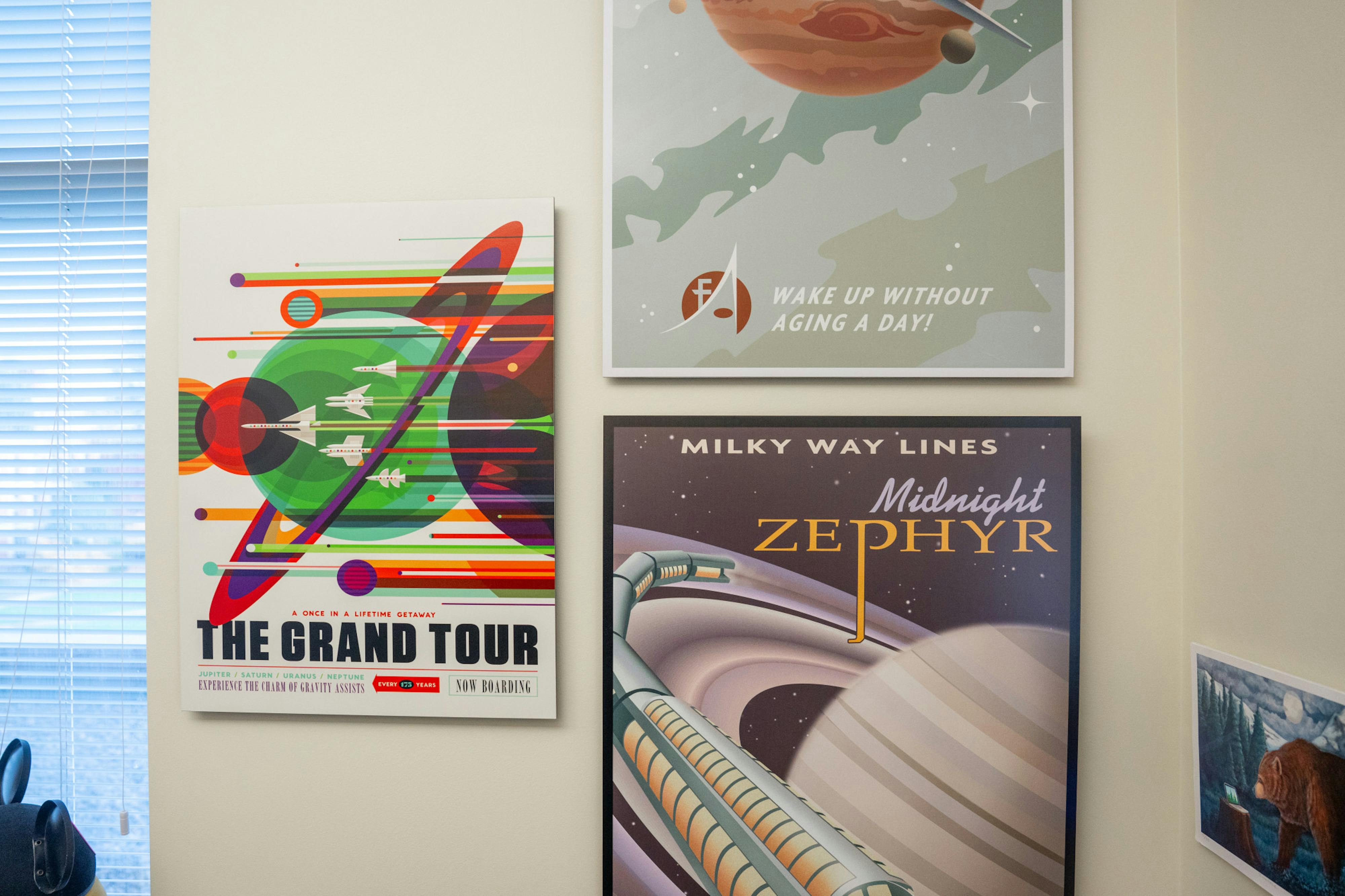
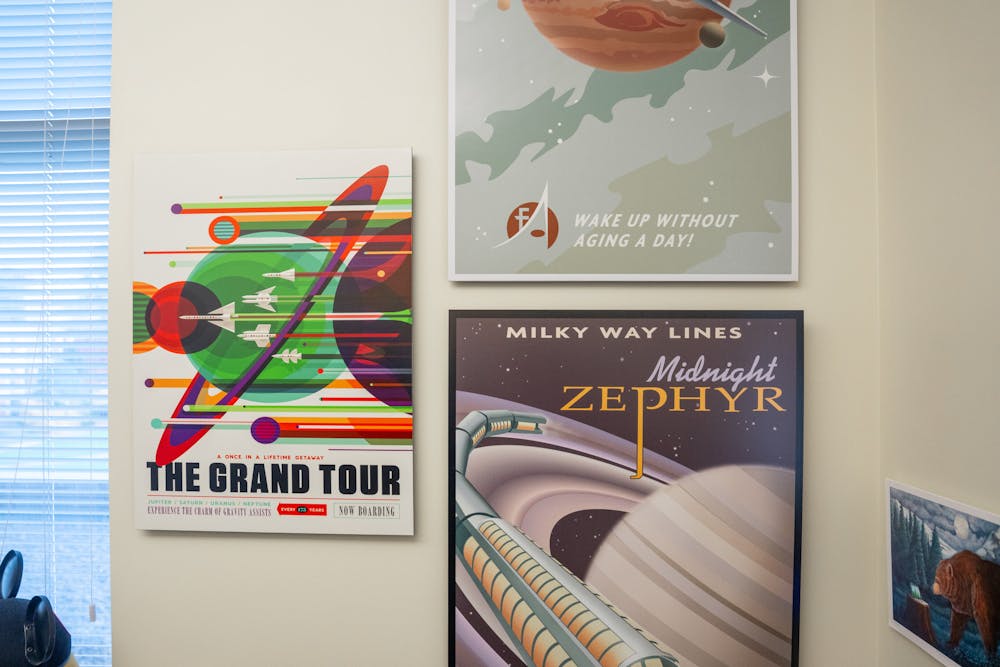
The sign outside the office door bears the museum’s name, prompting the archival mania ahead. Inside, I found shelves of historical gadgets, posters depicting planets and organized clutter. 
“[The museum’s] not official, it's completely made up,” Anctil said. “It's sanctioned by no one. I am the chief historian and archivist for the whole thing. I started collecting all kinds of really cool, weird stuff [that] I can take into class and teach [with].”

Anctil says the museum began with his own outdated technology, like his first computer, the Macintosh SE 30, which was made in 1989. Despite its bulky appearance, Anctil says it’s the best personal computer ever made.

“I remember taking it to the university library, setting it up at a table and working on it,” Anctil said. “I had a big bag, but at a time when most people were typing on typewriters, it was kind of magic to have a [portable] computer that you could use.”

For Anctil, the museum compares our current chapter in history to where technology has been and to where it will go in the future. 

Just like how a colon and a right parenthesis evolved into a smiley, yellow icon, Anctil believes that the technology we live with today is only the beginning of this digital age. 

“Everyone always thinks we're in the last chapter of the play, like we've made it,” Anctil said. “No, [technological innovation] could go on for five more acts. What do you think is gonna happen over the next 10 to 20 years?”

As any good museum or art gallery would, Anctil considers the “Cosmic Techno Museum” to be an invitation for his students to be introspective about their relationship to technology.

Whether it be in his courses “Exploring Humanity in a Technological World” or “Sports Media,” Anctil challenges his students to hand him any piece of technology, promising to address the ethical issues it may introduce. 

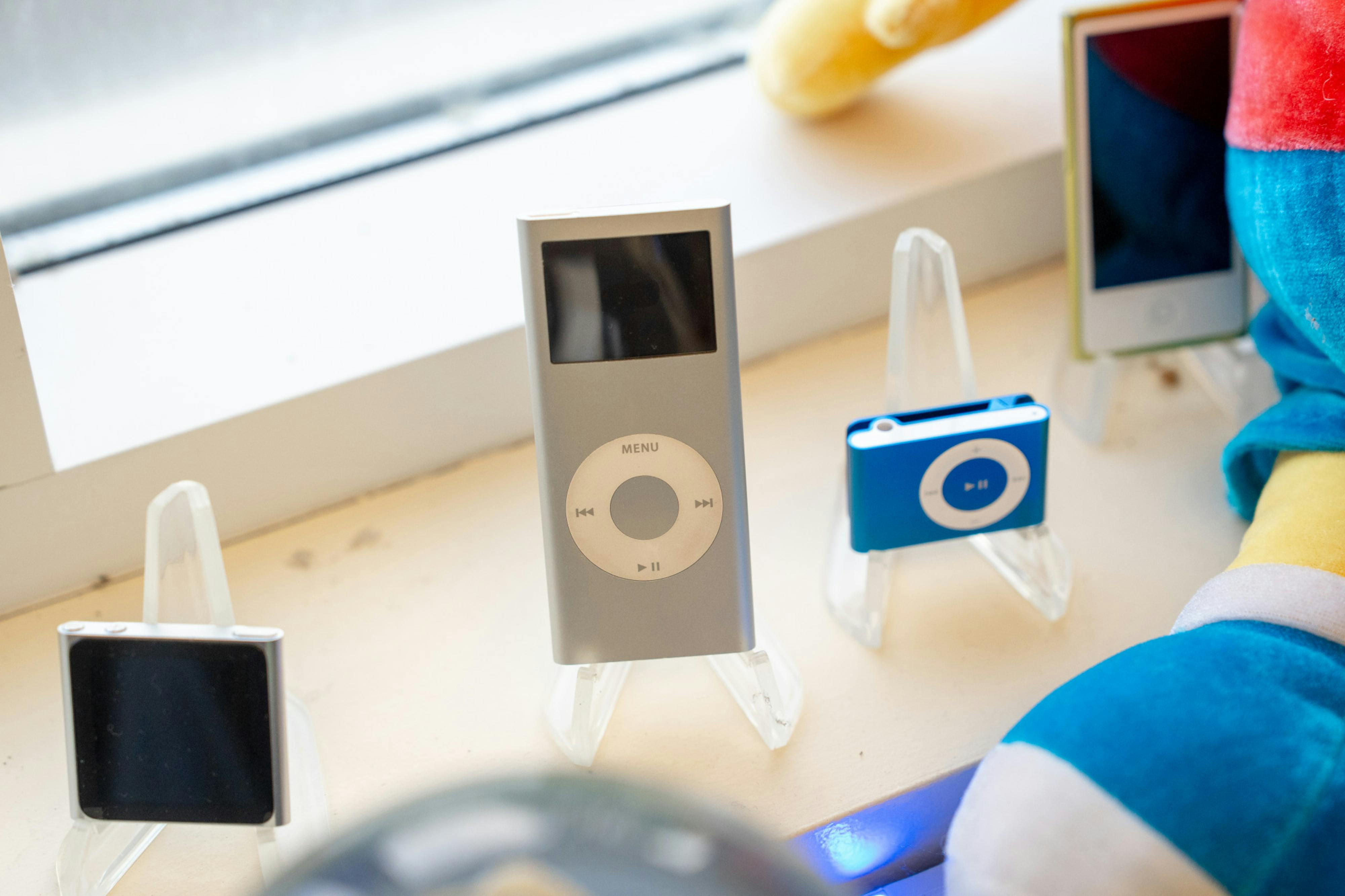
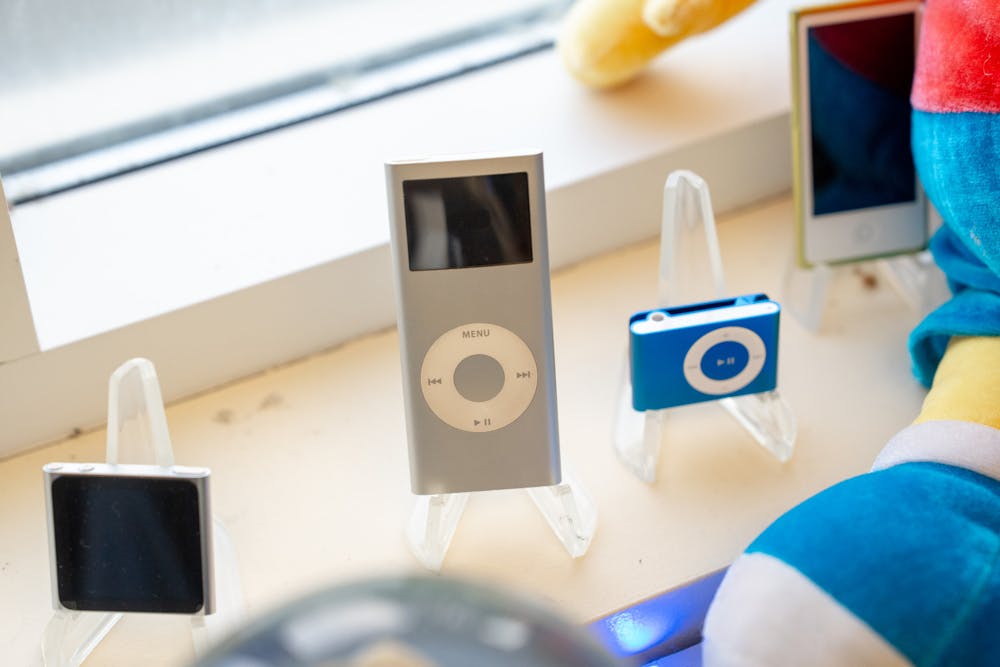
Anctil scanned the room for an object to test his skill. He led me to his shelf of archival Apple products, landing on the original iPod from 2001

“This little iPod right here?” Anctil said. “Talk about a pain [to use], how do you even know what you're listening to? Think of all the pirated music that could go on to one of these things. So what obligation does the technology have to the [protection of the] artist?”

I wasn’t the first visitor to tour the “Cosmic Techno Museum,” and judging by the decades of history in the room, I won’t be the last. 

Anctil welcomes everyone to pay a visit to the museum he has crafted. But he also urges caution when engaging with tech. 

“As somebody who is an advocate for exploring our relationship to tech and loves collecting these kinds of things, I'm the first person to say, ‘Put the stuff down when it gets in the way of you living your real life,’” Anctil said. 

Kalena O’Connell is the News and Managing Editor for The Beacon. She can be reached at oconnell27@up.edu.


B