Junior psychology major Q Acosta applied to study abroad in South Korea to strengthen his Korean language skills.
He became interested in South Korea through K-pop but quickly realized that keeping up with variety show appearances and behind-the-scenes content required understanding the culture and language.
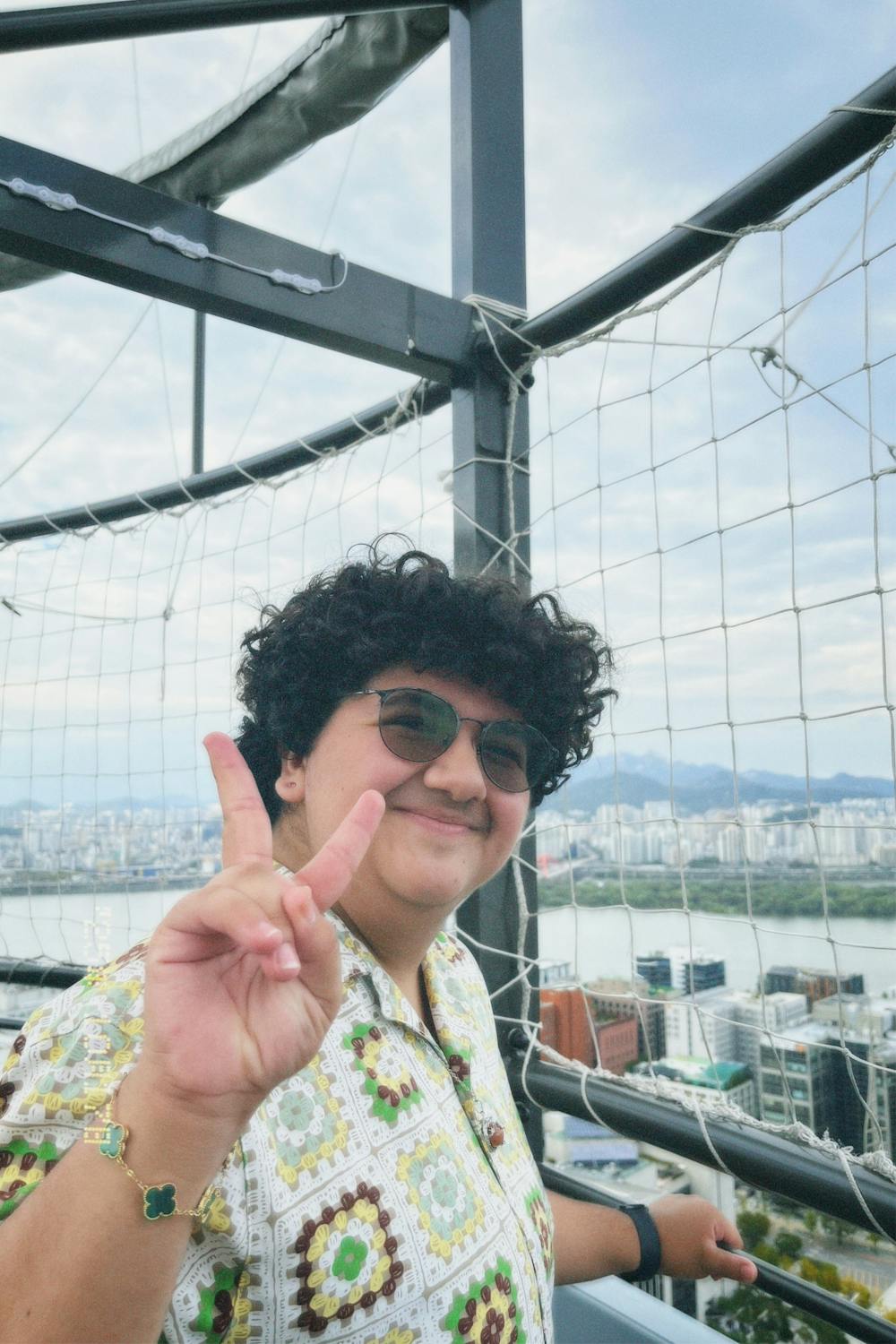
Q Acosta faces the camera while holding up a peace sign. Acosta rode a hot air balloon as part of his Seoul Metro program. Photo courtesy of Q Acosta.
“I think language and culture are like a huge thing,” Acosta said. “I think they're kind of intrinsically intertwined. I wanted to come here to be able to fully get the Korean experience and to learn the language better. Because, what better way to learn the language than to fully immerse yourself in it?”
UP’s Seoul, South Korea study abroad program, which sent its first cohort to Sogang University this fall, is more than an opportunity for fans to experience a place they’ve only viewed through a screen; it's also a chance for learning, cultural engagement and personal growth.
The program, which opened for applications in fall 2024, is small, accepting an average of two students per semester, according to Chelsea Swick, study abroad program manager.
At Sogang, Acosta is enrolled in a Korean language course, along with classes in history, psychology, psycholinguistics and race and ethnicity.
All courses available to UP students are taught in English, larger, more lecture-based and include a mix of international students and Korean nationals, Acosta says.
Mya Nguyen, a senior accounting major and the other UP student in Seoul, describes South Korea’s academic culture as more intense than UP and says it's made her more studious.
She remembers sitting on campus at 1 a.m. and watching several students still entering and exiting the library.
“I feel like everywhere I go, everyone's locked in,” Nguyen said. “One time I came home late and I was like, ‘Oh my gosh, that student is from my school. It's almost 1 a.m. What are they doing leaving school at this time?’”
Housing, however, is similar to UP. Students live on campus in an international student dorm. The rooms are small, but they include a private bathroom, heating and air conditioning, according to Acosta.
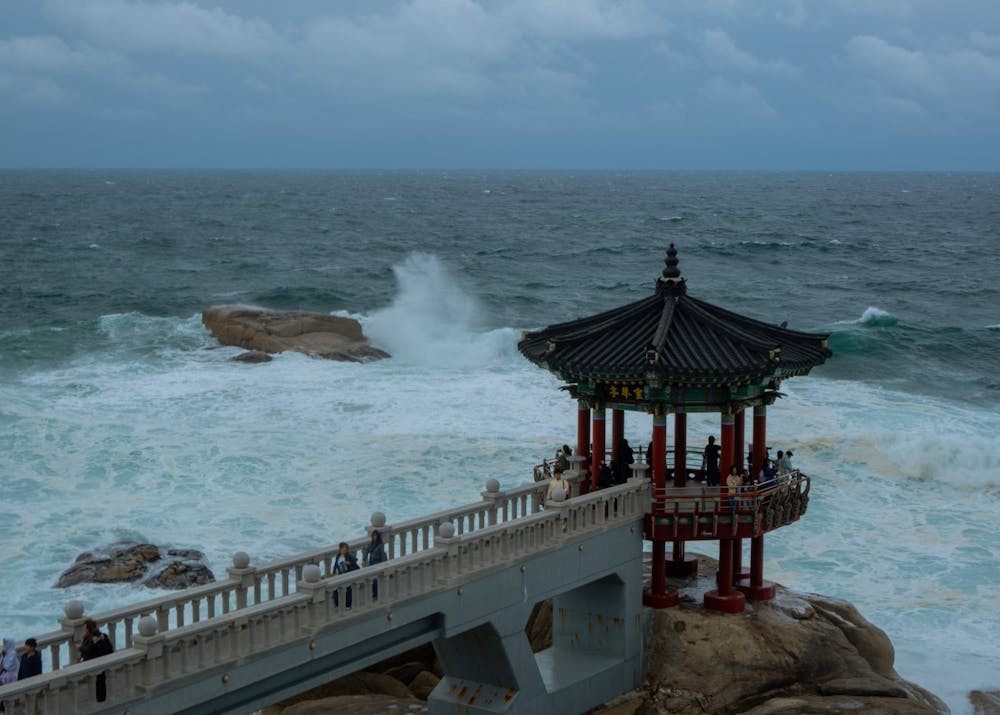
A traditional Korean-style pavilion, named Yeonggeumjeong. This relic is located in Sokcho, a fishing port city, overlooking the Sea of Japan or East Sea. Acosta visited Sokcho with friends during his Chuseok — Korean Thanksgiving — break. Photo courtesy of Q Acosta.
Those headed to Seoul should also expect culture shock. One of the biggest surprises for Acosta was South Korea’s “ppali ppali” or “quickly quickly” culture — the idea that Korean people highly value speed and efficiency.
“When you're crossing the road and it's counting down, if it's at three seconds, people will run,” Acosta said. “If the subway’s almost coming, you better start running.”
Nguyen found herself pleasantly surprised at how willing Korean people are in helping her navigate the language barrier. She recalls her first day on Korean soil after landing, struggling to find her Airbnb, when a woman approached her and helped her through a translation app.
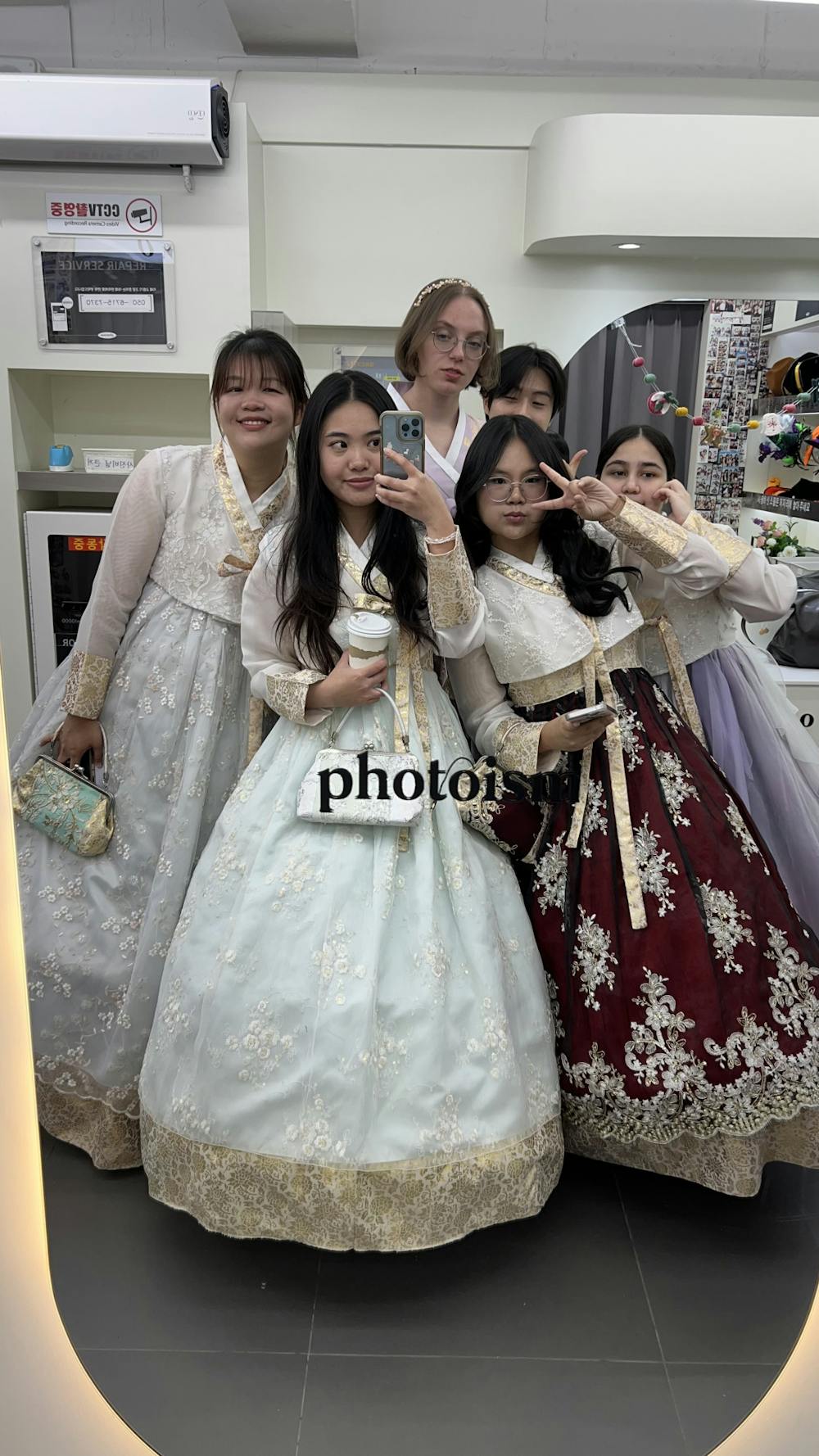
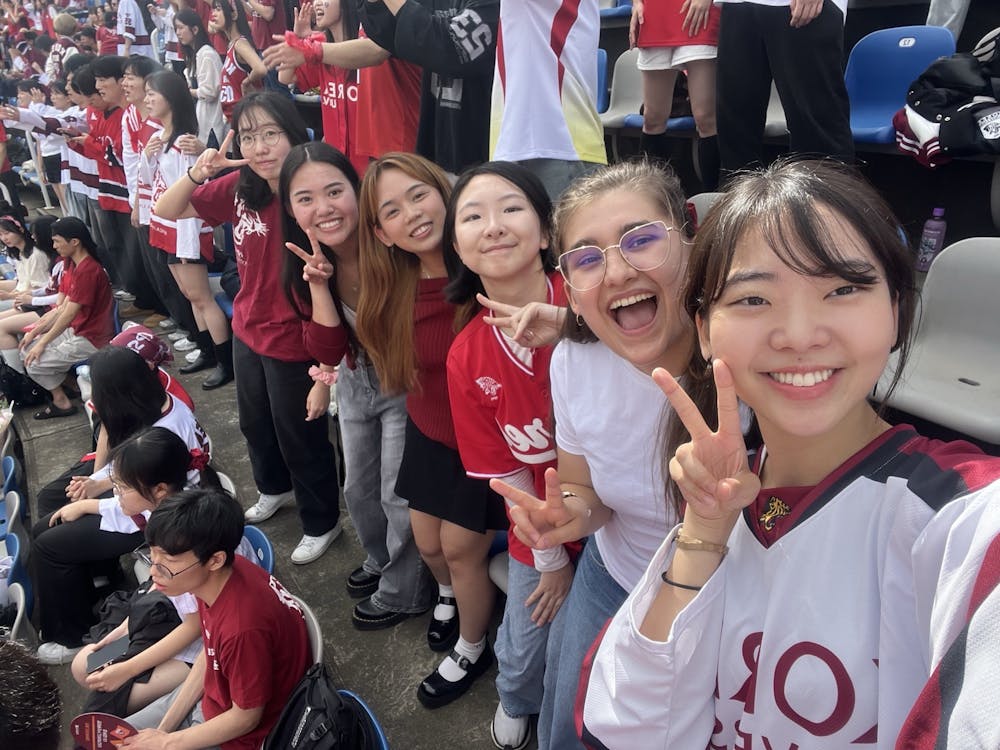
Mya Nguyen and her friends pose for a photo wearing traditional Korean hanbok. Photo courtesy of Mya Nguyen.
Acosta says the language barrier does create difficulties, however, especially when dealing with challenges like sickness while abroad.
Another potential difficulty of the program is the hands-off nature of direct enrollment, Swick says. Differing from non-direct enrollment programs like London and Salzburg, where students study in a community designed for study abroad, the Seoul program functions as a standard exchange, where students are integrated into a foreign university.
“It is independent,” Swick said. “You're part of everything, but you've got to be the one asking for help. That's a huge part of study abroad. And one of the really beautiful things about it, I think, but it can be also overwhelming to have so much independence thrown on you.”
Acosta recommends reaching out to past program participants to curb any fears applicants might have.
“It's a very hands-off program, and I think sometimes that can come with a lot of anxiety and uncertainty,” Acosta said. “So I think contacting people who have been will be really helpful because then you can kind of base your ideas off of that.”
Aside from the nerves, the Seoul program is an opportunity for exploration and experiencing the joys of travel.

Fireworks at the Seoul International Festival at the Han River. Photo courtesy of Q Acosta.
Some of Acosta’s favorite study abroad memories include drone and firework shows at the Han River, the “best food he’s ever had” in Jeonju, his first solo traveling experience to Busan and the cultural immersion program called “30 Days in Seoul,” where one of the activities was a hot air balloon ride.
All things considered, Nguyen says she recommends the program to anyone interested in applying.
“I feel like studying abroad is good because experiencing another culture, getting out of your comfort zone, experiencing the struggle, the hardship, it's very useful and builds a new characteristic for you,” Nguyen said.
Maggie Dapp is the News and Managing Editor for The Beacon. She can be reached at dapp26@up.edu.
Editor’s Note: A photo caption describing a Korean monument as “overlooking the Sea of Japan” has been changed to include mention of the East Sea, an alternate name for the body of water used by the Republic of Korea.