
On Feb. 19, the Oregon Department of State Lands (DSL) demanded that Robert Pamplin Jr. pay $13.9 million for his neglect of the Willamette River.
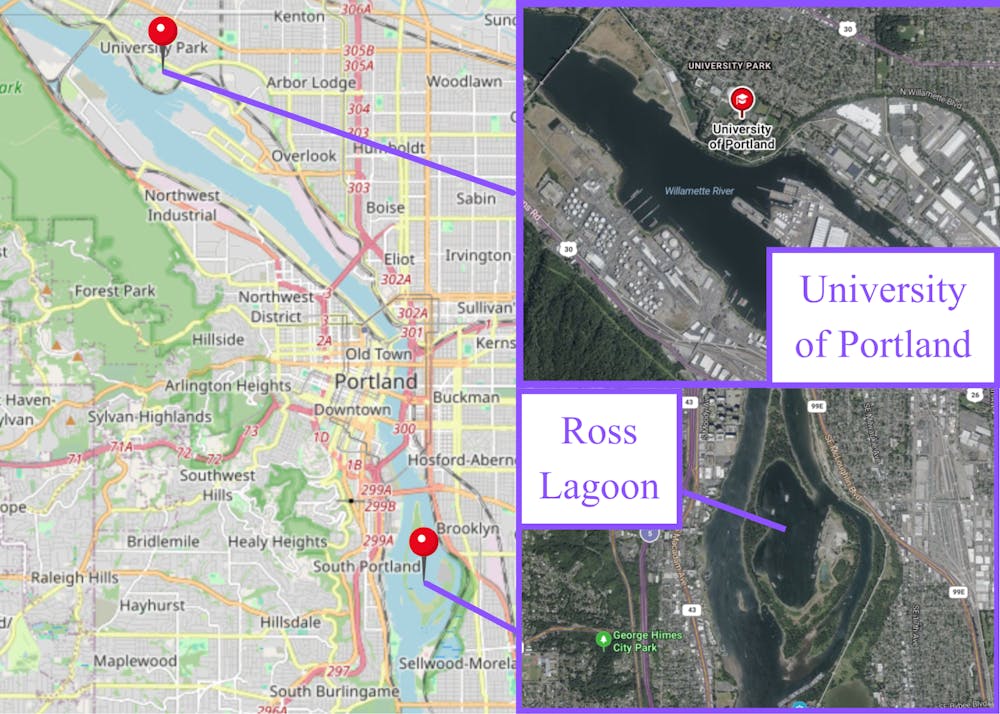
From 1926-2001, Ross Island Sand & Gravel, one of Pamplin’s companies, mined the island’s lagoon for sand and gravel. After mining ceased, Pamplin and the state reached an agreement that he would refill the excavation sites — a promise the DSL says Pamplin didn’t keep.
This is just one of many recent legal issues that Pamplin has found himself in. In late 2024, Pamplin conceded to laundering pension funds from R.B. Pamplin Corporation, his family’s business.
In the spring of 2025, UP’s business school was renamed to the University of Portland School of Business, dropping the Pamplin name from its title.
The School of Business is no longer affiliated with the alum, according to Director of Public Affairs Dan Christopherson.
“The association of Dr. Pamplin’s name with the University of Portland School of Business was subject to an agreement that concluded, and his name has not been associated with the School of Business since the spring of 2025,” Christopherson said in an email to The Beacon.
Pamplin has a long history with UP. He earned a master’s in business and education from the university in 1968 and 1975, respectively. He was then awarded an honorary doctorate at the university in 1972 and the university’s first Distinguished Business Alumnus Award in 1989.
The university made no public announcement about the name change, according to Christopherson.
Rowan Bierwirth, a junior marketing and finance double major, only recently learned about the name change. While she doesn’t believe the change affects her studies, Bierwirth is surprised that the school didn’t disclose it when the change occurred.
Bierwirth says that the recent legal actions could serve as a lesson for business students about the importance of ethics.
“The great thing about our business school is that so many professors stress the importance of ethics and being morally correct,” Bierwirth said. “We do such a great job being very real about the business world and being super transparent about how things can go down in corporate. And so I think the story [of Pamplin’s legal issues] is what matters.”
Kristin Sweeney, the chair of the environmental science program, whose expertise centers on the physical processes of rivers, explains the two main reasons Pamplin’s excavation sites need to be filled.
The first is that filling the site would prevent the lagoon’s slopes from becoming destabilized. If the island begins to erode due to that destabilization, there’s a chance that the contaminated sediment that’s been dumped on the island will be released into the water.
“The slopes of the lagoon are so steep that they're actually not as stable as they would like to be,” Sweeney said.
Additionally, filling the hole would create wetlands, which serve as off-channel habitats for juvenile salmon and other aquatic species that need low-energy environments, according to Sweeney.
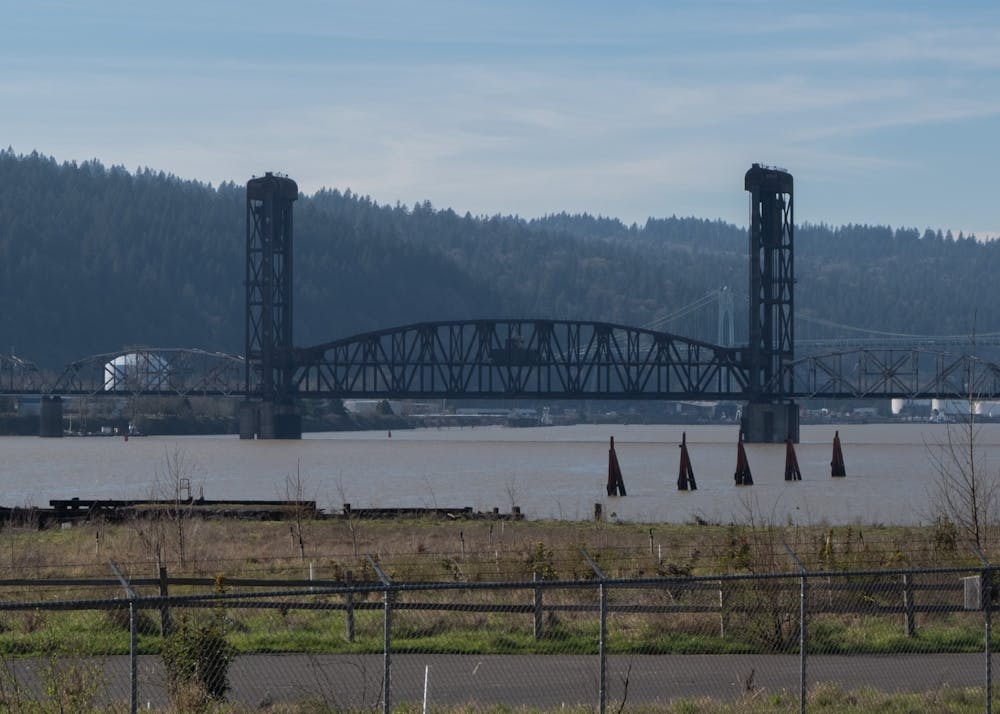
Despite The Bluff’s proximity to the Willamette River, Sweeney doesn’t predict that the damage done to the island will affect the campus.
Samantha Zavala is the Diversity, Equity and Inclusion Editor for The Beacon. She can be reached at zavala27@up.edu.